Maria Regina Martyrum
Berlin, Germany
1960~1963
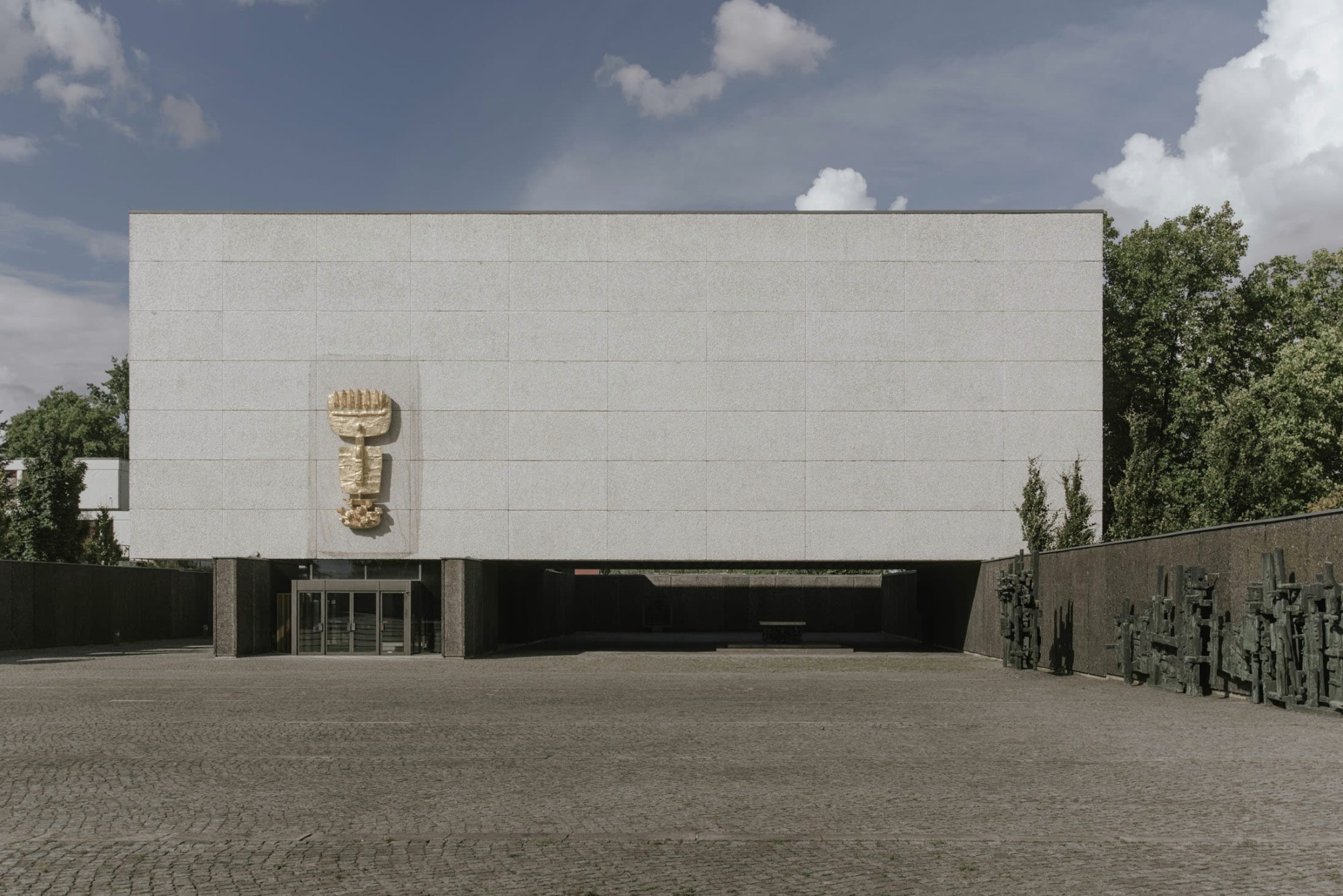
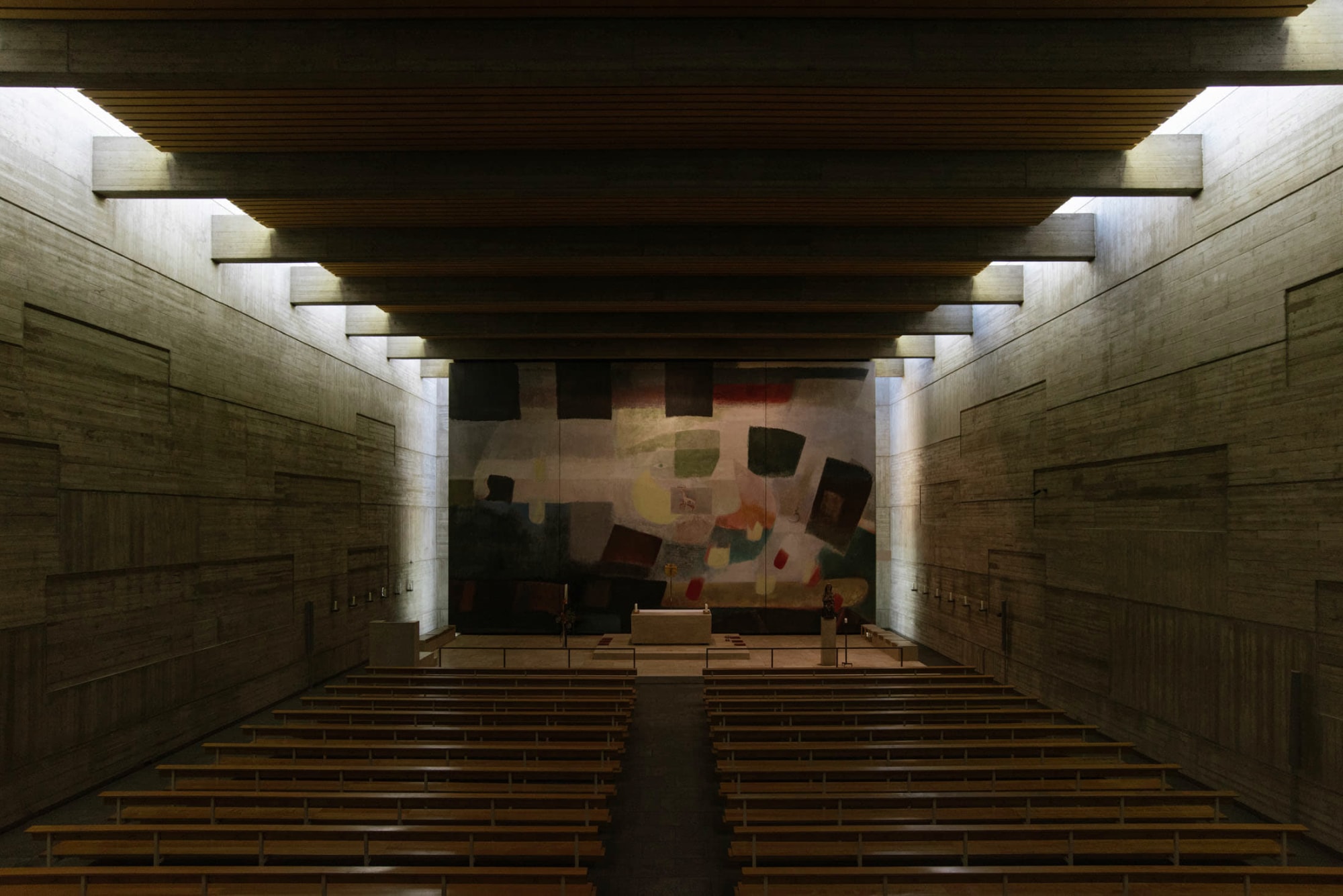
Maria Regina Martyrum (1960-63) is a stark, brutalist memorial church dedicated to the victims of National Socialism, particularly those who died for their faith. Architects Hans Schädel and Friedrich Ebert designed a ritual procession rather than a static building. Access is through a somber, enclosed ceremonial courtyard (Feierhof) paved with black basalt and bounded by dark pebble-dashed walls, evoking the roll-call squares of concentration camps. Hovering above this heavy ground is the "Upper Church"—a gleaming, suspended rectangular volume clad in white marble pebbles, symbolizing spiritual transcendence over earthly suffering. Inside, light is strictly controlled: slit windows separate the walls from the floor and ceiling, making the massive concrete shell appear weightless. A colossal abstract fresco "The Heavenly Jerusalem" by Georg Meistermann dominates the altar wall. The architecture does not comfort; it confronts, using the tension between the heavy darkness of the courtyard and the floating light of the sanctuary to create a powerful spatial narrative of martyrdom and redemption.
玛利亚烈后教堂
德国 柏林
1960~1963年
玛利亚烈后教堂(1960-63)是一座致力于纪念纳粹牺牲者,特别是为信仰殉道者的野兽派纪念教堂。建筑师汉斯·谢德尔和弗里德里希·艾伯特设计了一条仪式性的路径而非一座静态建筑。入口通过一个沉郁、封闭的仪式庭院(Feierhof),铺设黑色玄武岩并在四周环绕深色卵石墙,唤起人们对集中营点名广场的记忆。凌驾于这片沉重土地之上的是"上层教堂"——一个悬浮的、覆以白色大理石卵石的长方体体量,象征精神对世俗苦难的超越。内部光线受到严格控制:条形窗将墙壁与地面、天花板分离,使巨大的混凝土外壳显得失重。格奥尔格·迈斯特曼创作的巨幅抽象壁画《天上的耶路撒冷》占据了祭坛墙面。这座建筑并不提供慰藉,而是通过庭院的沉重黑暗与圣所的悬浮光明之间的张力,构建了一个关于殉道与救赎的宏大空间叙事。