Santa Maria Church
Marco de Canaveses, Portugal
1996
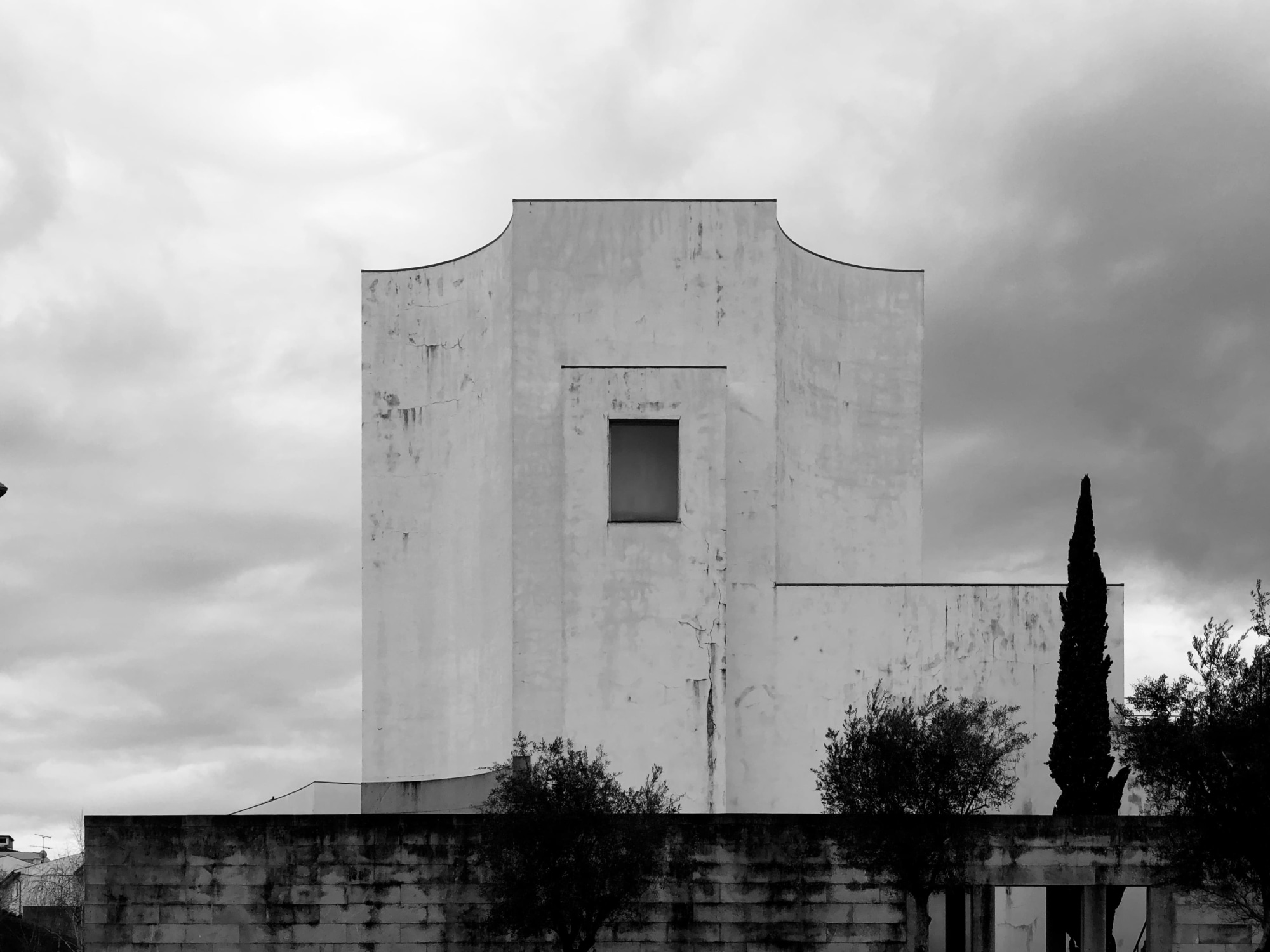
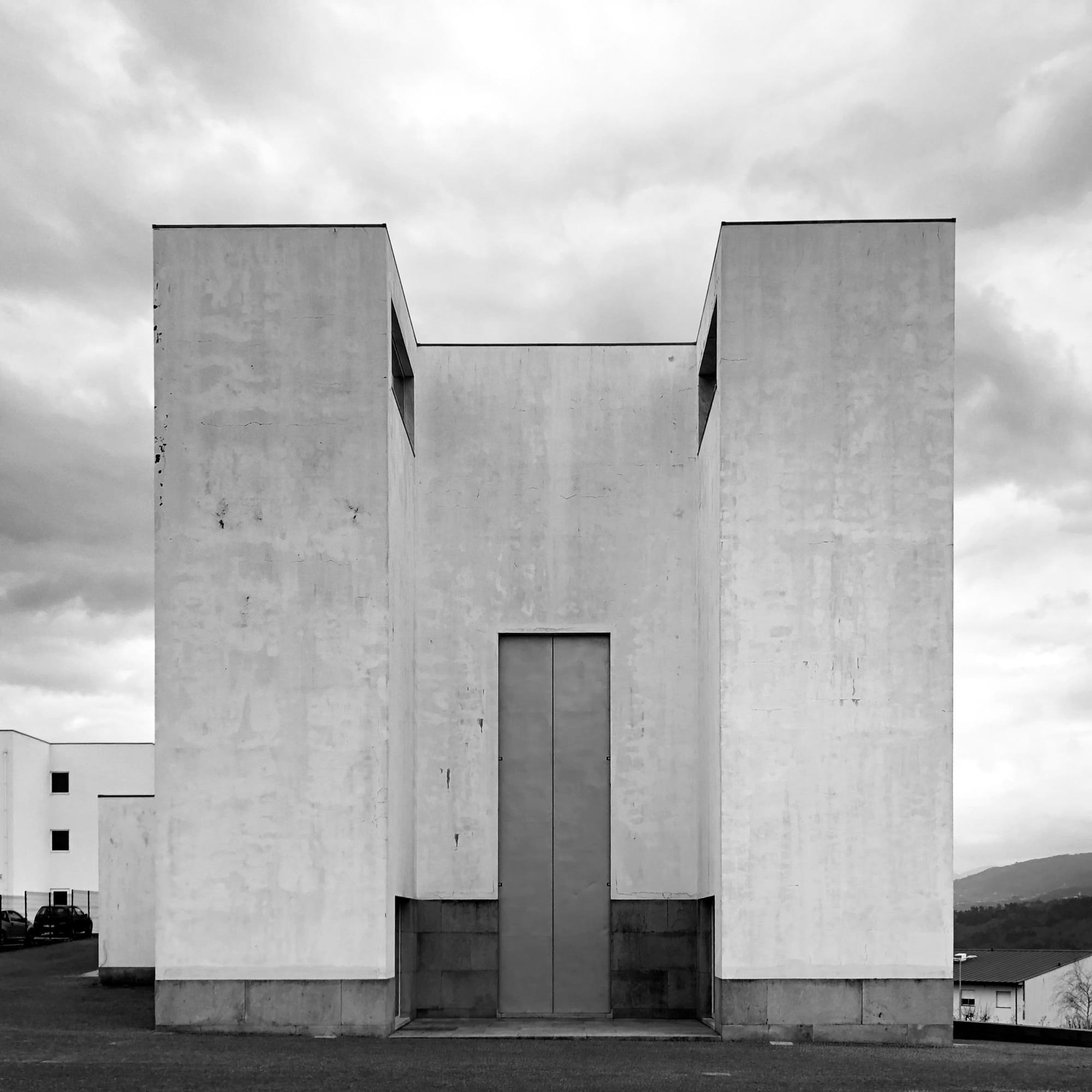
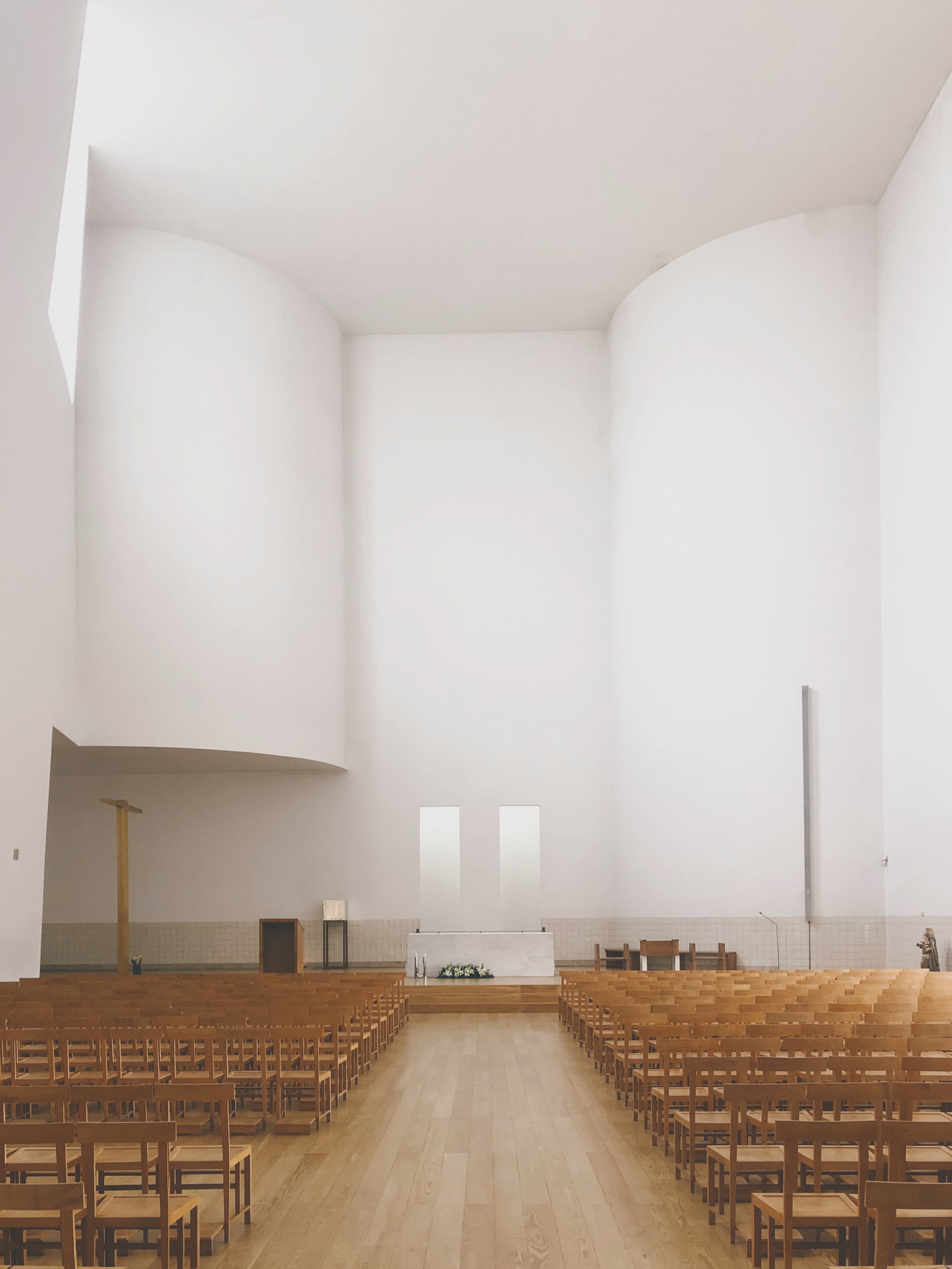
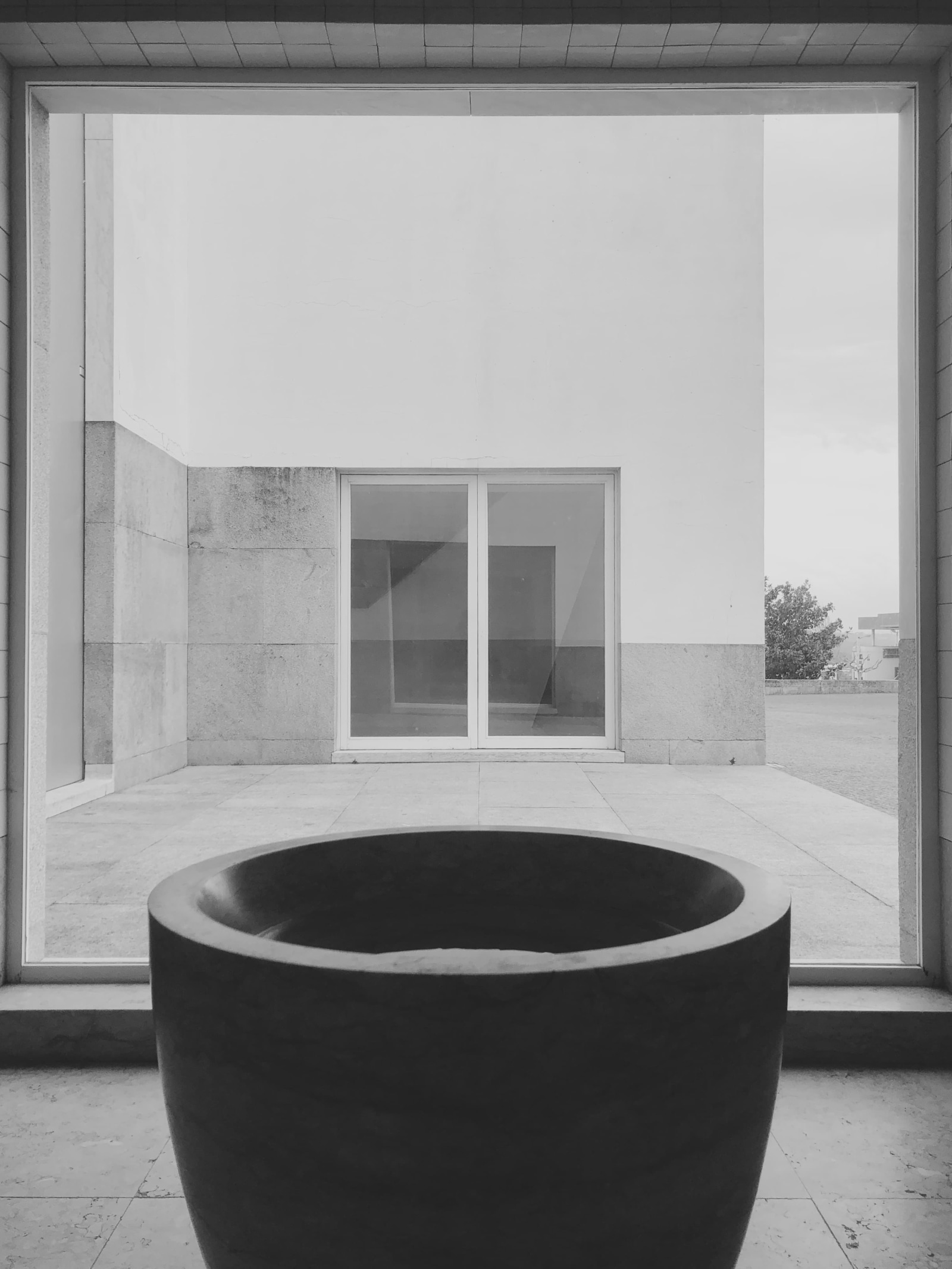
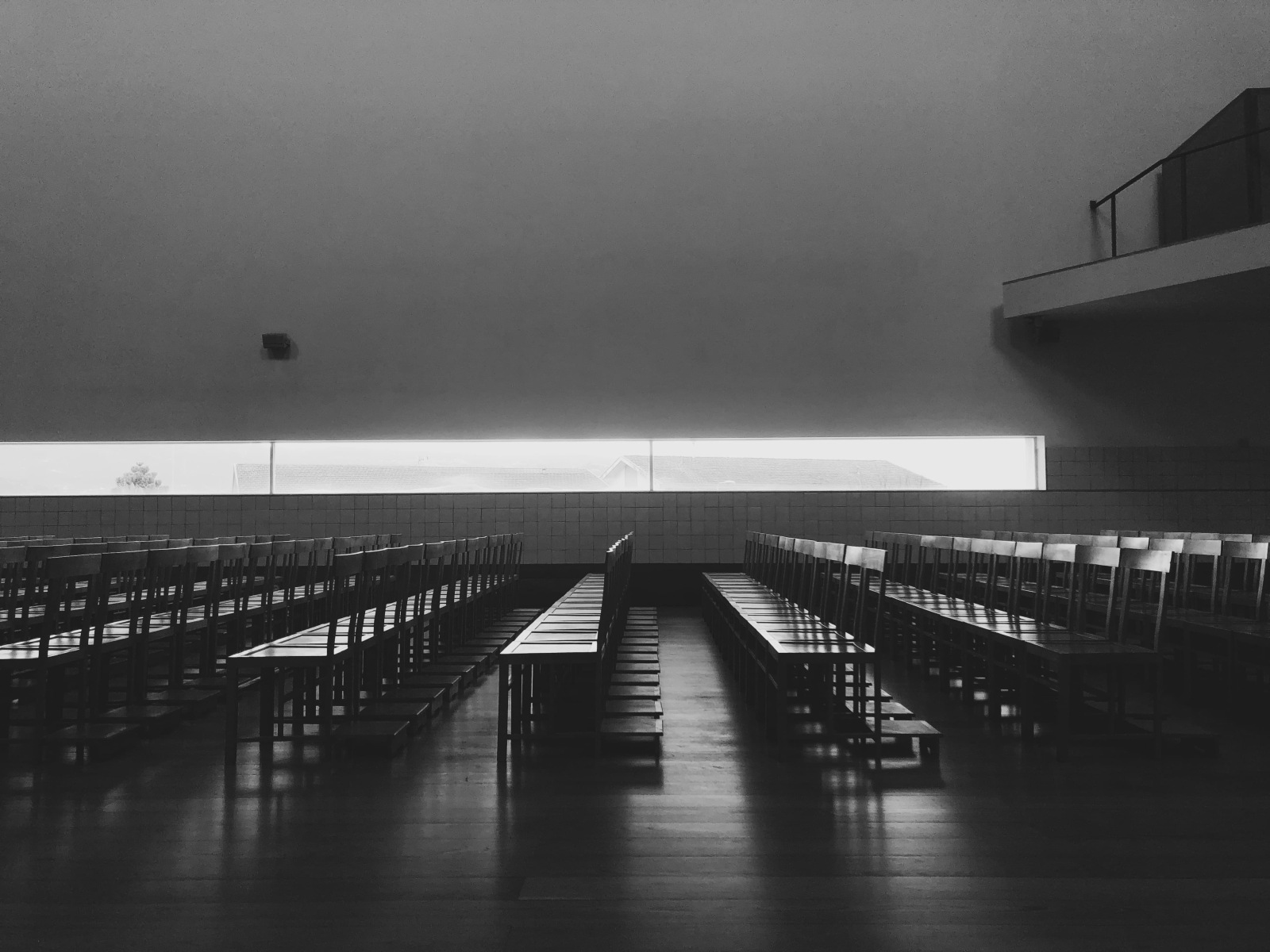
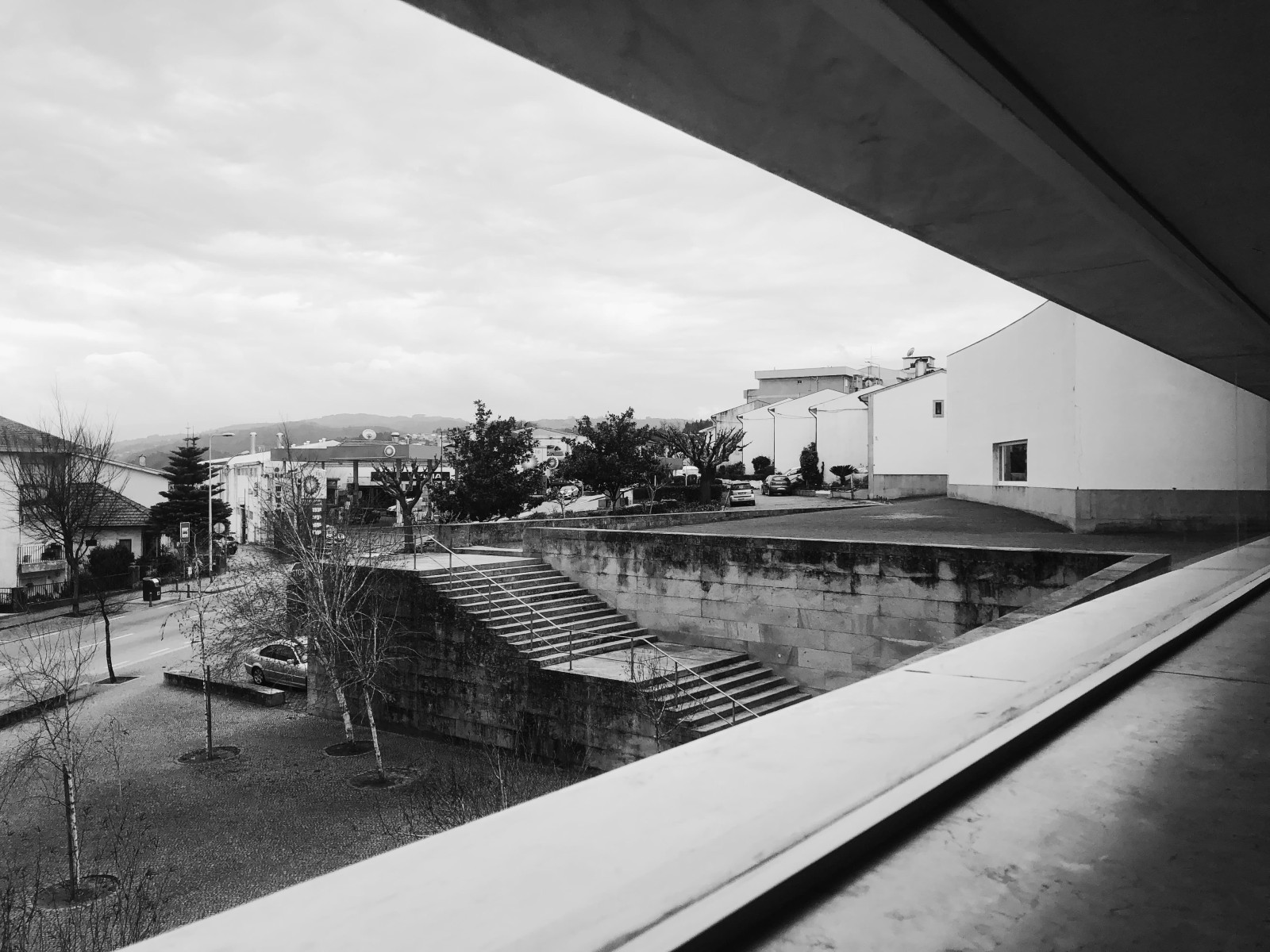
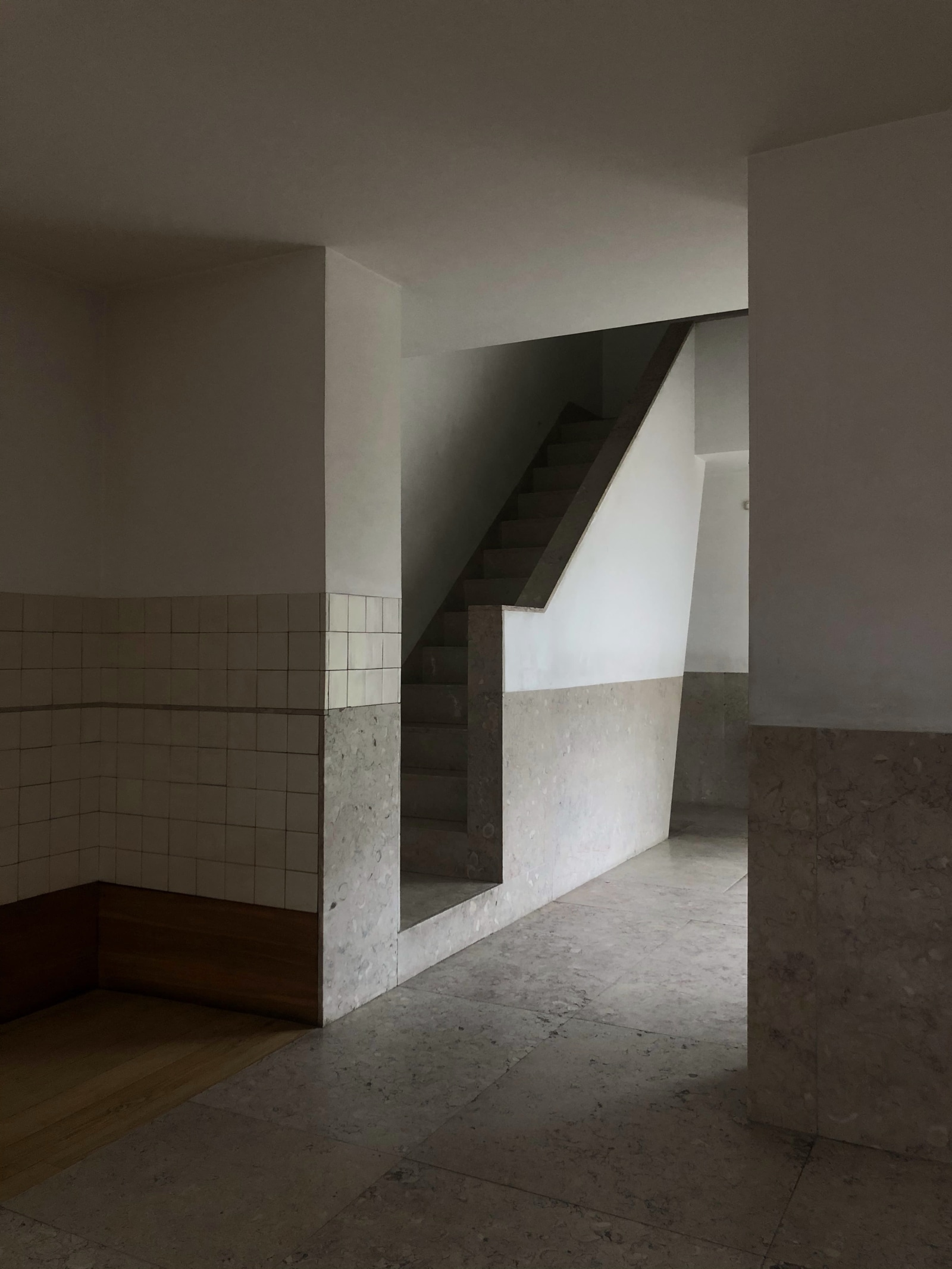
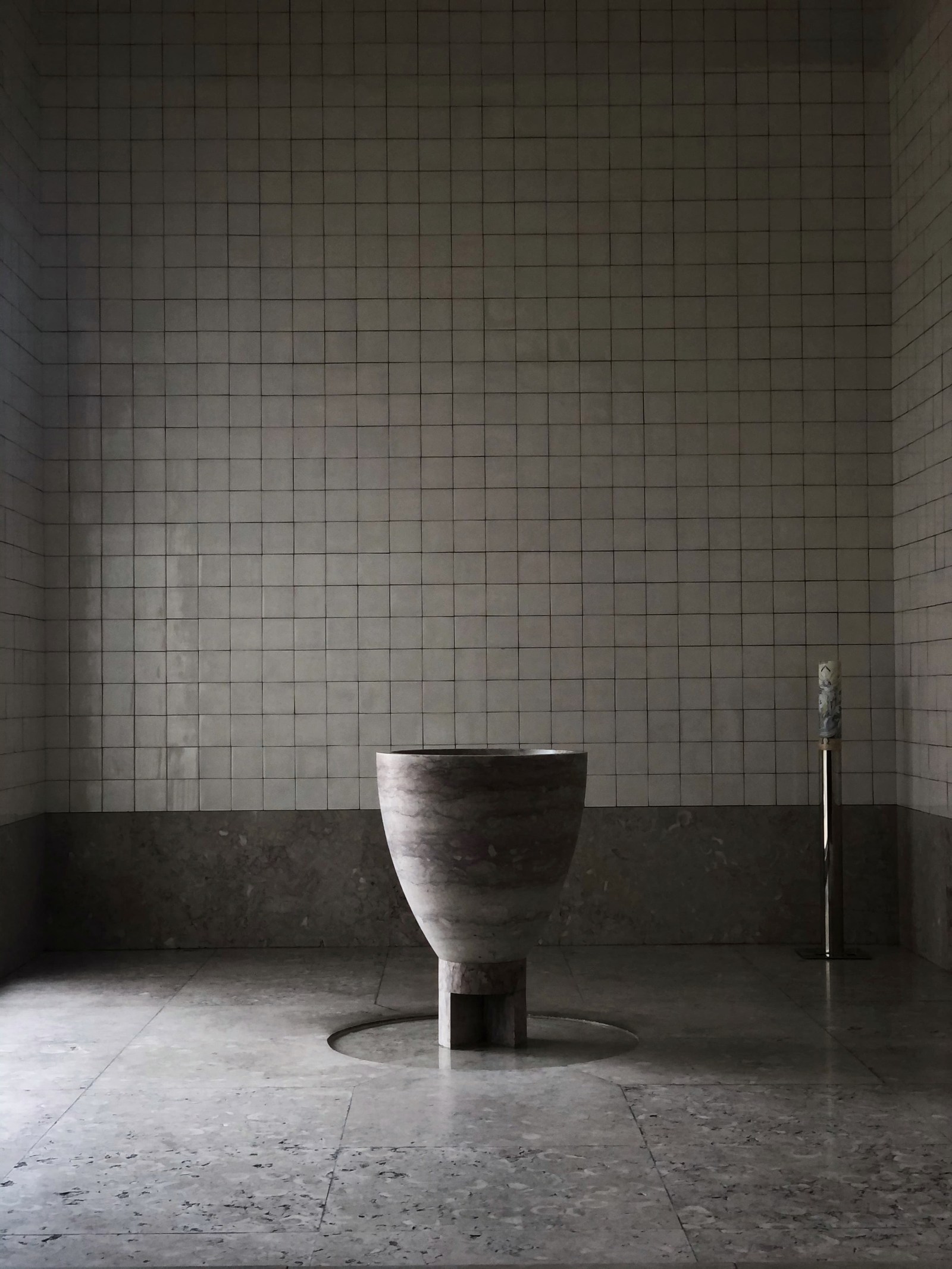
Designed in 1990-96, Santa Maria Church navigates a critical tension: how to embody the sacred in an era of spatial abstraction. Siza's response is rooted in precise phenomenological manipulation. The church is structured on two levels—an upper assembly hall and a lower crypt-mortuary chapel faced in granite, which appears to emerge organically from the steep escarpment. The eastern end's two concave curves compress space toward the presbytery, subtly referencing Portuguese Baroque spatial compression while maintaining geometric rigor. Light becomes the primary medium of the sacred: a low horizontal window frames distant mountains; large light shafts illuminate the crypt with "pale, steady light from above"; the statue of Our Lady is intensely lit to introduce the altar zone. The post-Vatican II amphitheater-like arrangement positions the priest facing the congregation, making liturgy a collective act. Water flows in a granite basin in the crypt, evoking Marian chapels in Portuguese Baroque—a fusion of Christian and pagan symbolism where Mary is depicted in "rocky" grottoes as light from darkness. The project ultimately demonstrates that sacred space can be constructed through purely architectural means—light, stone, water, and spatial hierarchy—rather than overt religious symbolism.
圣玛利亚教堂
葡萄牙 马尔科-迪卡纳韦塞斯
1996年
1990-96年设计的圣玛利亚教堂直面一个关键张力:如何在空间抽象的时代体现神圣性。西扎的回应植根于精确的现象学操控。教堂分为两层——上层集会大厅与下层地穴-哀悼礼拜堂,后者覆以花岗岩,仿佛从陡峭的悬崖中有机生长。东侧两个凹曲面将空间压缩向圣坛,在保持几何严谨性的同时,微妙地参照了葡萄牙巴洛克的空间压缩手法。光成为神圣性的首要媒介:一扇低矮的横向窗框取远山;巨大的光井以"从上方投下的苍白、稳定的光"照亮地穴;圣母雕像被强光照射以引入祭坛区。梵二会议后的半圆形剧场式布局让神父面向会众,使礼拜成为集体行为。地穴中的花岗岩水盆流淌着水,唤起葡萄牙巴洛克中的圣母礼拜堂——这是基督教与异教象征的融合,玛利亚常被描绘在"岩石"洞穴中,如同黑暗中的光。该项目最终证明,神圣空间可仅通过纯粹的建筑手段——光、石、水与空间等级——而非明确的宗教符号来构建。