St. Antoniuskirche
Basel, Switzerland
1925~1927
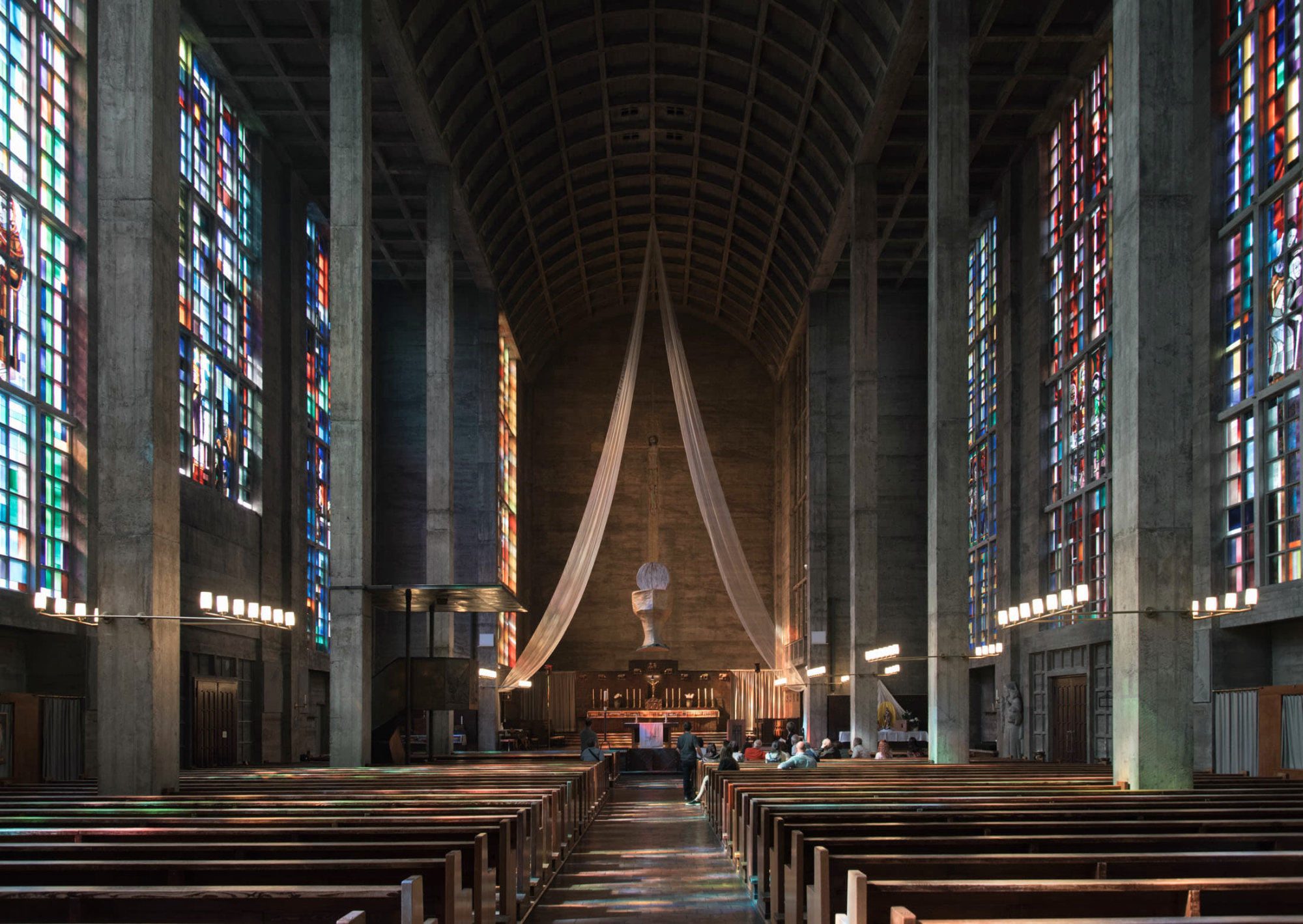
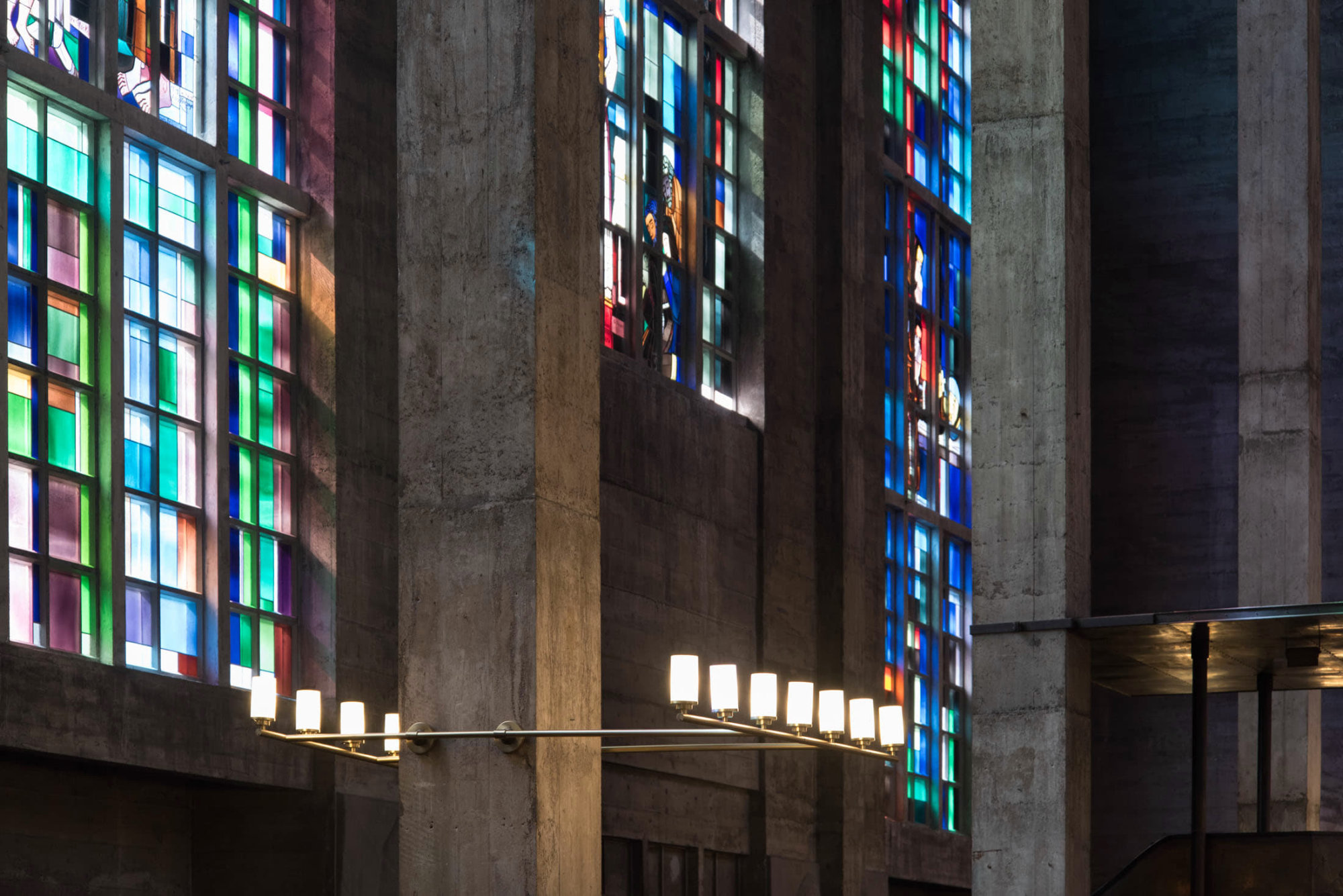
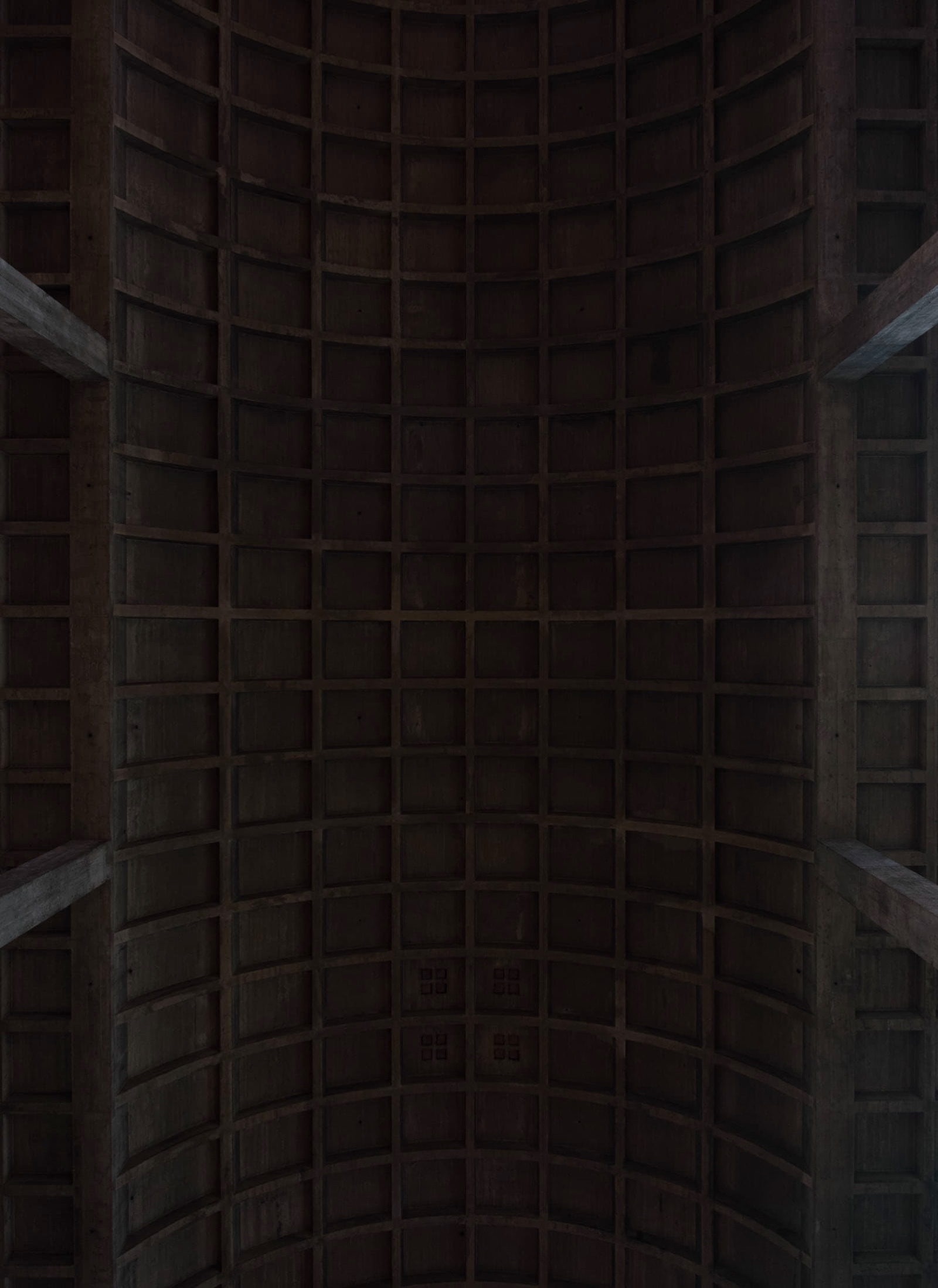
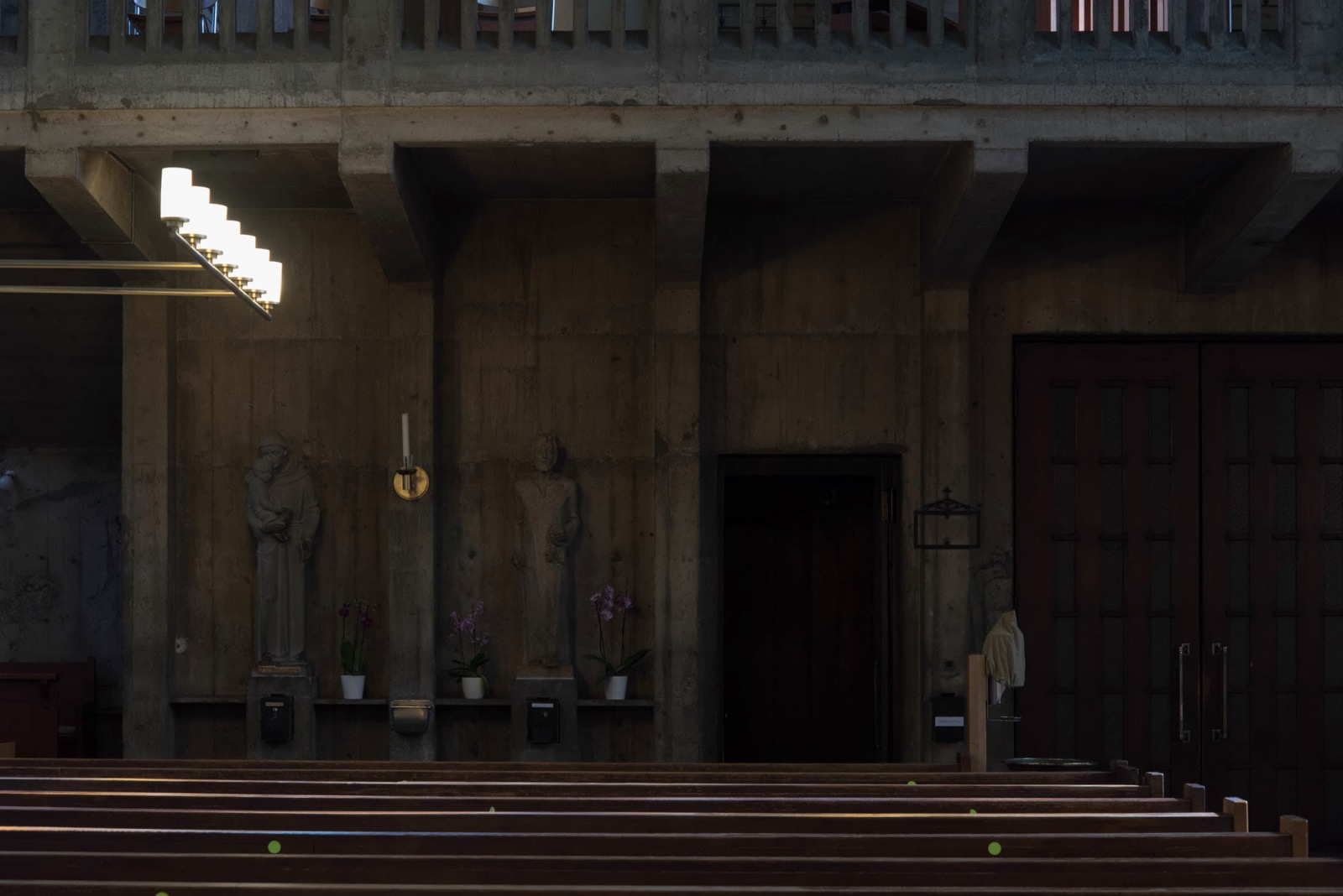
Widely considered Switzerland’s first reinforced-concrete church, St. Antoniuskirche (1925–1927) made construction the architecture. Moser cast the frame and surfaces monolithically, avoiding applied ornament and enabling broad, column-free spans with a lucid liturgical axis. Contemporary critics dubbed it a “Seelen-Silo” (soul silo), but the interior contradicts the sobriquet: daylight is filtered through bands of polychrome glazing and deep reveals, tinting the concrete in shifting tones and stabilizing acoustics for chant and speech. The church’s program was explicitly social and modern—the industrial material of the district becomes the sacred fabric—aligning theological sobriety with structural rationalism. Joints, coffers, and edges are left legible so that the act of making is visible; the building reads as a didactic section of interwar concrete know‑how. The result is not a style piece but a paradigmatic redefinition of Swiss sacred space: structure as finish, light as liturgy, and material as doctrine.
圣安东尼教堂
瑞士 巴塞尔
1925~1927
通常被认为是瑞士首座混凝土教堂的圣安东尼教堂以“结构即建筑”的方式取消装饰性包覆,整体浇筑的构架直接生成大跨无柱的礼仪空间。建成之初曾被讥为“灵魂筒库”(Seelen‑Silo),但内部体验与此相反:高侧窗与成带的彩色玻璃将自然光分层导入,赋予混凝土以细微的色温变化,同时改善声学条件以服务诵唱与宣讲。把工业材料用于工人社区的宗教建筑,是一种清醒的时代选择——礼仪的克制与结构的理性在此合一。节点、肋与边界被刻意保留其可读性,使“施工过程”成为可见的建筑语言;这座教堂由此成为战间期混凝土技术与宗教空间范式转型的关键注脚:以结构为表皮,以光线为礼仪,以材料为教义。