
Thessaloniki: A Tapestry of Architectural Eras
Thessaloniki, Greece
4th century
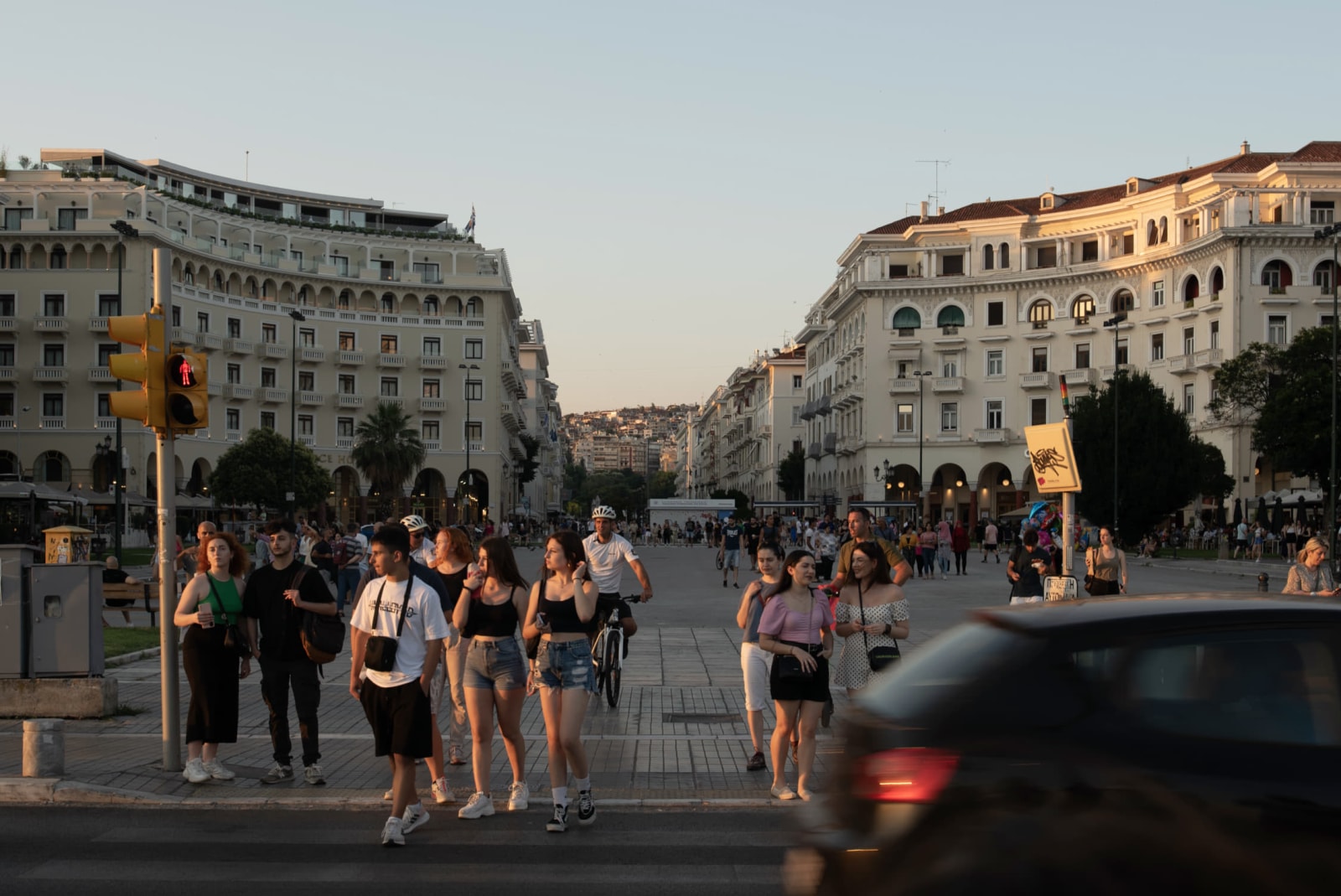
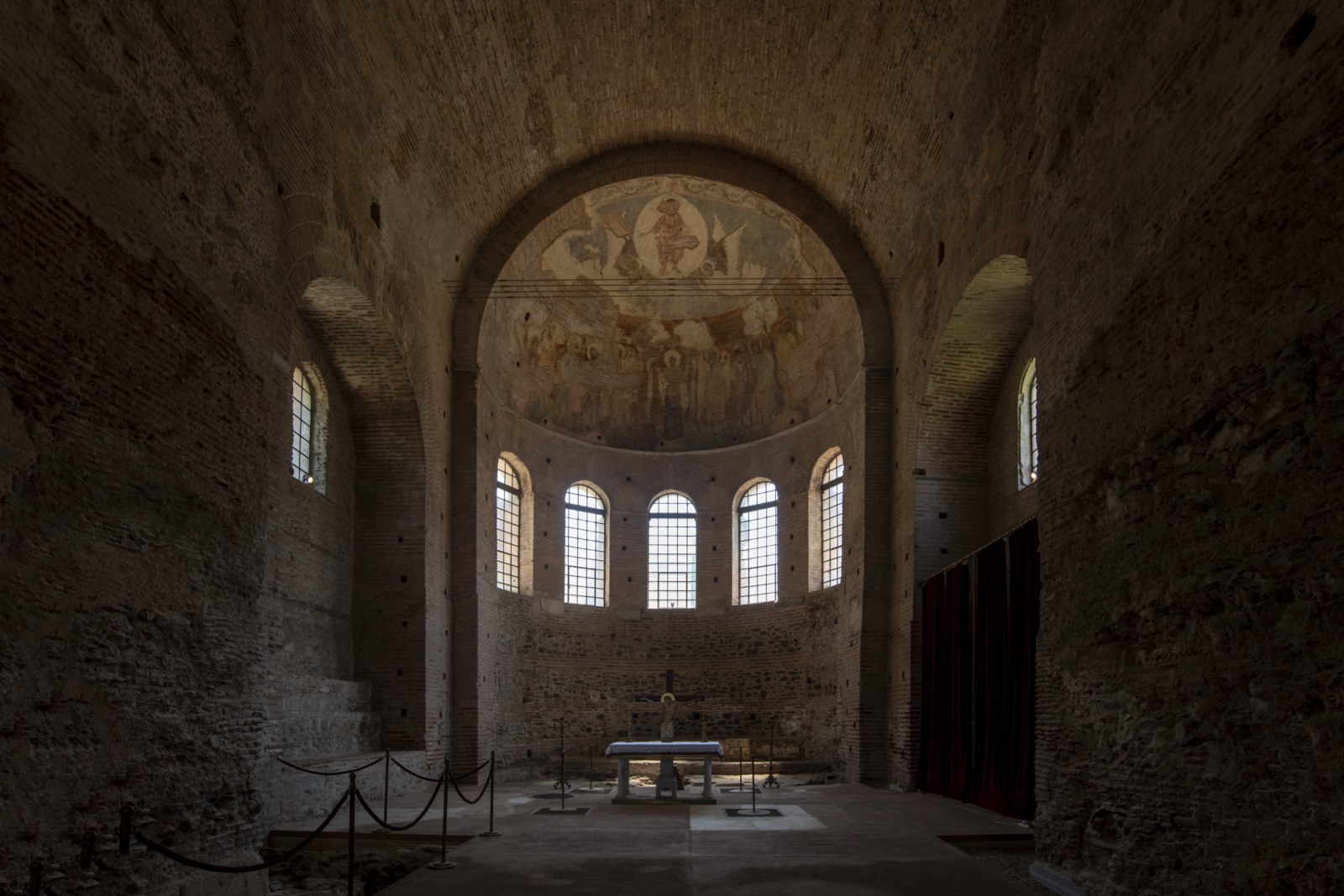
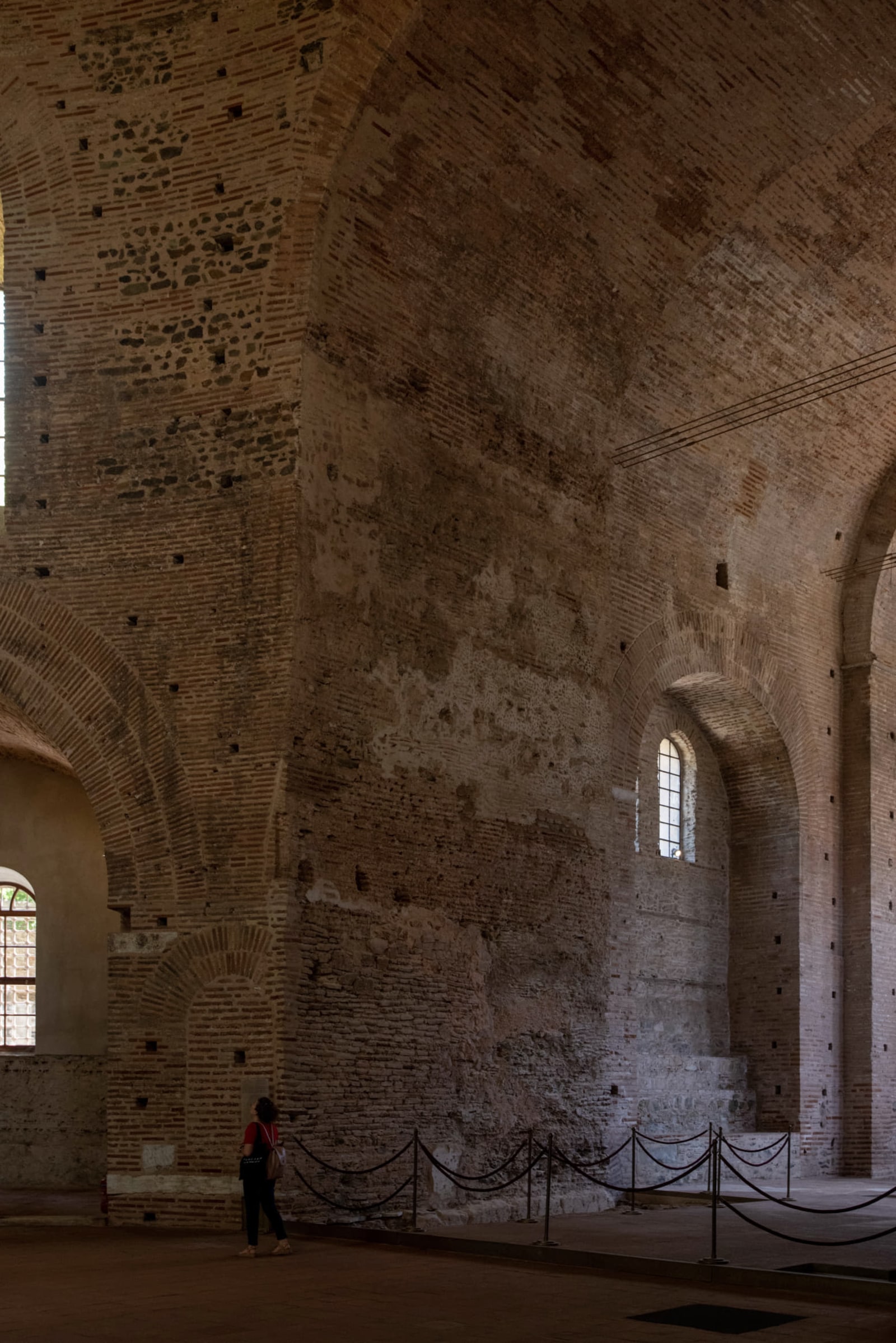
Thessaloniki's urban fabric presents a rich palimpsest of architectural epochs. Dominating the cityscape is the monumental Rotunda (c. 4th century CE), originally a Roman mausoleum or temple, whose massive cylindrical structure and subsequent conversions into a church and mosque testify to shifting cultural narratives and enduring structural presence. While Byzantine churches with their intricate brickwork and luminous mosaics dot the historic center, the early 20th century brought a transformative urban vision. Following the 1917 fire, Ernest Hébrard's design for Aristotelous Square introduced a grand, axial public space. This U-shaped plaza, defined by Classically-inspired colonnaded facades and opening towards the Thermaic Gulf, established a new monumental heart for the city, blending European planning principles with an ambition for localized architectural expression. Thessaloniki's architecture thus narrates a compelling story of Roman monumentality, Byzantine spiritual artistry, and early modern urban re-imagination.
塞萨洛尼基:时代印记
希腊塞萨洛尼基
约公元4世纪
塞萨洛尼基的城市肌理展现了建筑纪元的丰富叠层。其中,宏伟的圆形大厅(约公元4世纪)雄踞城市景观,这座最初作为罗马陵墓或神庙的巨大圆柱形结构,及其后续转变为教堂和清真寺的历程,见证了文化叙事的变迁与结构生命力的延续。遍布历史中心的拜占庭教堂以其精致的砖石工艺和璀璨的马赛克镶嵌画为特色,而20世纪初则带来了颠覆性的城市构想。1917年大火之后,厄内斯特·埃布拉尔规划设计的亚里士多德广场引入了一个宏大的中轴对称公共空间。这个U形广场,以古典主义风格的柱廊立面为界,向塞尔迈湾开敞,为城市构建了全新的纪念性核心,融合了欧洲规划原则与本土化建筑表达的追求。因此,塞萨洛尼基的建筑叙述了罗马的雄伟、拜占庭的精神艺术以及近代早期城市重塑的引人入胜的故事。